

Sungreen Cloud Classroom | sungreen Logistics was invited to participate in the "IMDG Rules" amendment activity salon of the Shanghai Maritime Safety Administration to comprehensively analyze the 42-24 amendments that are about to be enforced!
The International Maritime Dangerous Goods Code (referred to as the IMDG Code) serves as a mandatory international regulation in the field of international maritime transportation of packaged dangerous goods. According to resolution MSC.556(108), its 42-24 amendments will come into force compulsibly on January 1, 2026.
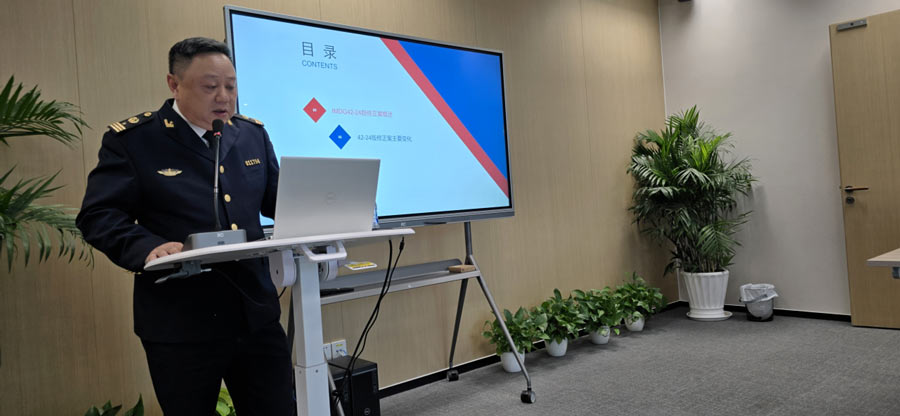
On the afternoon of December 18th, the first legal popularization salon of the SHANGHAI Maritime Safety Administration invited Mr. Wang Hua from the Pudong Maritime Safety Administration to give a detailed interpretation of the amendment to the "IMDG Rules". SHANGHAI SUNGREEN LOGISTICS GROUP CO.,LTD. As an industry representative, I was invited to attend this event and, together with many leaders from the maritime safety administration and industry experts, studied and discussed the specific contents of this amendment.
Here, the editor of sungreen Logistics, based on the provisions of international legal provisions and the content of conference activities, will give you a detailed interpretation of the amendments to IMDG Rules 42-24.
Before we officially start, let's first understand the amendment context of the "IMDG Rules" :
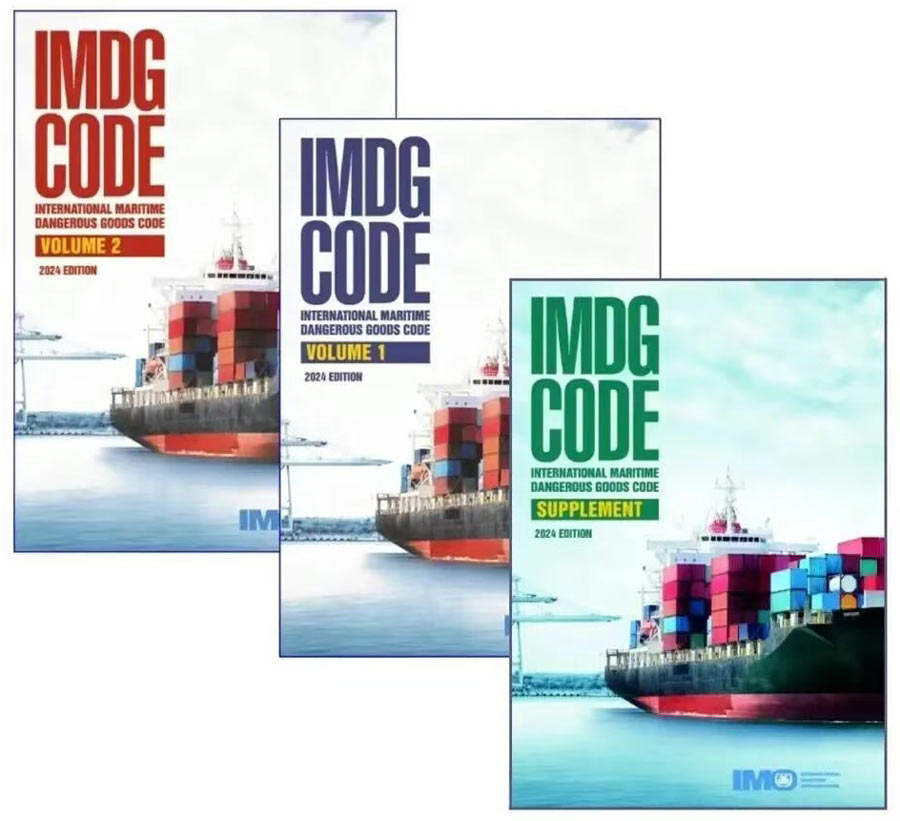
The IMDG Rules are revised by the IMO Subcommittee on Cargo and Container Transport (COC) and the Editorial and Technical Working Group (E&T), and are updated every two years. After the draft amendment is reviewed and approved by the Maritime Safety Committee (MSC), it enters the voluntary implementation stage the following year. Starting from January 1st next year, the 42-24 versions of the IMDG Rules will be enforced.
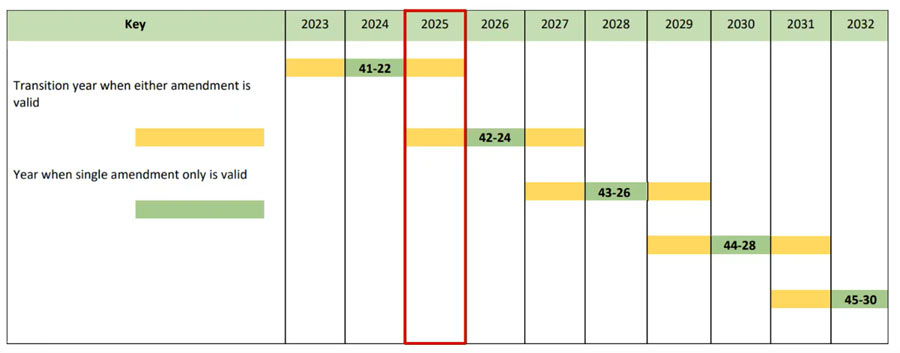
The revision framework diagram of the "IMDG Rules"
This amendment has added a total of 11 new items:
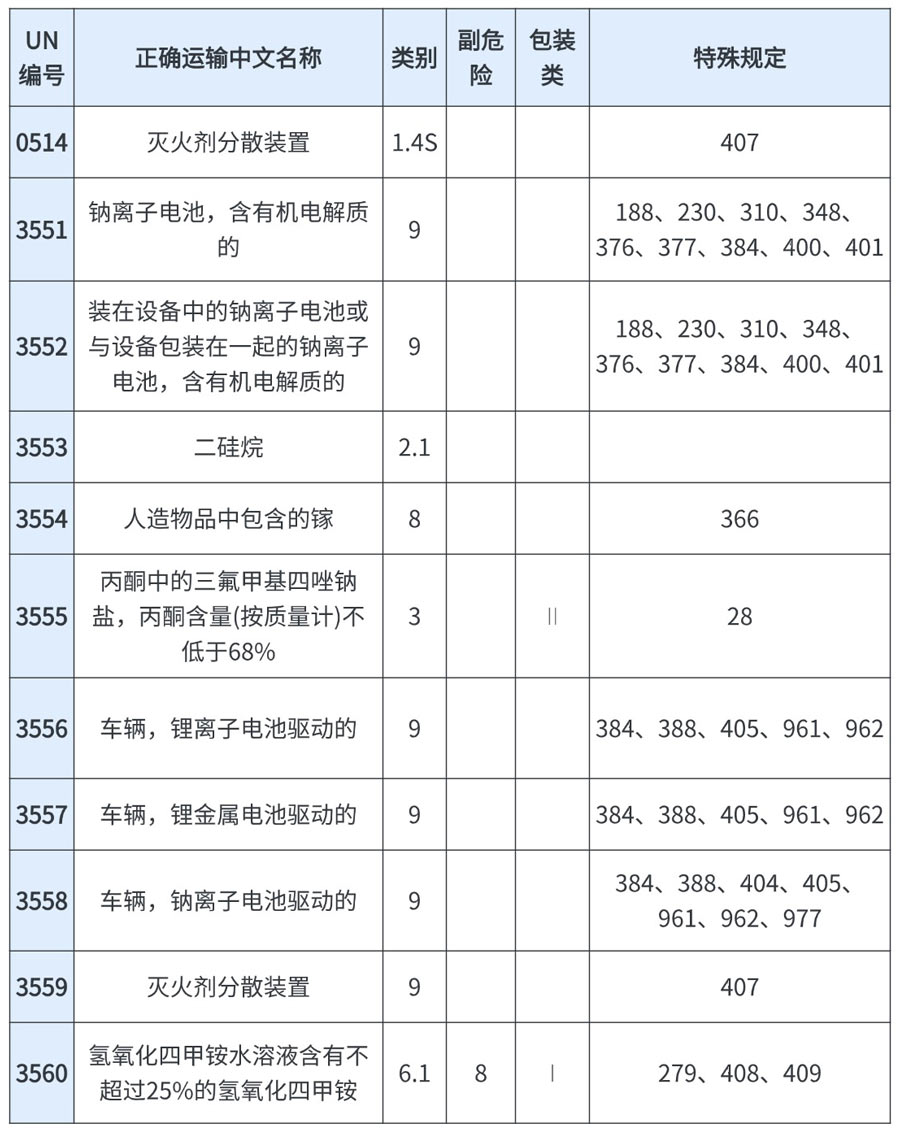
The specific classification and organization are as follows:
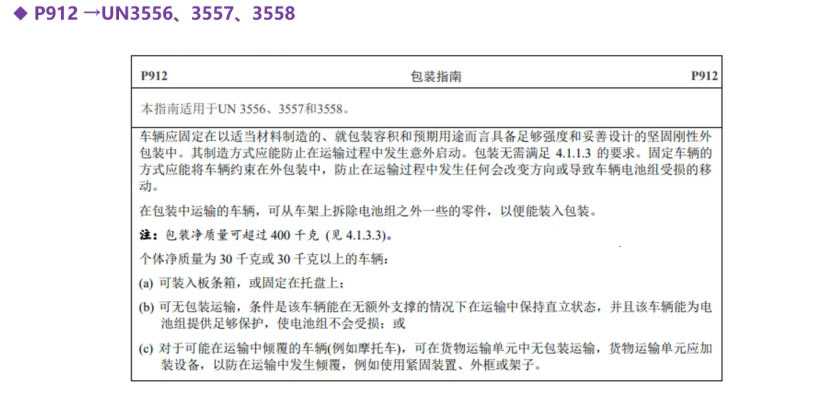
1、Three new entries for battery-powered vehicles have been added
After the amendment is officially implemented, all types of battery-powered vehicles will no longer be classified under UN3171. UN3171 will be changed to: vehicles and equipment powered by wet batteries, sodium metal batteries or sodium alloy batteries in battery-mounted transportation. Instead, three new entries were added based on different battery types:
UN3556 (New Addition) : Vehicles, powered by lithium-ion batteries.
UN3557 (New Addition) : Vehicles, powered by lithium metal batteries.
UN3558 (New Addition) : Vehicle, powered by organic sodium-ion batteries.
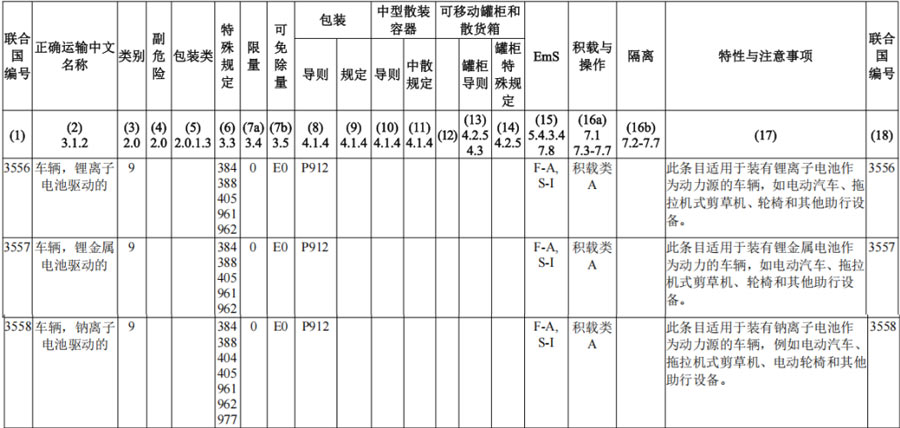
New special provisions:
SP404 (New Addition) : Applicable to vehicles powered by sodium-ion batteries (UN3558), which do not contain other dangerous items, are in a short-circuit state of sodium-ion batteries, and the batteries do not contain electrical energy, they are not subject to other provisions of the IMDG Regulations. Battery short circuits should be easy to verify (for example, the busbars between terminals).
SP405 (New Addition) : Applicable to vehicles powered by lithium-ion, lithium metal, and sodium-ion batteries (UN3556, UN3557, UN3558) :
1) When vehicles are not fully enclosed by packaging, crates or other items that prevent identification, they are not subject to the requirements of Chapter 5.2 regarding marking or marking;
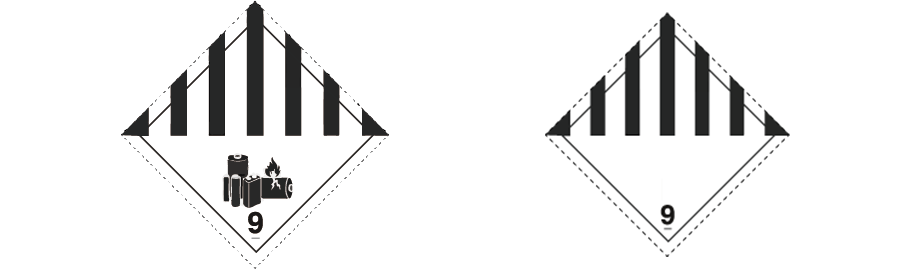
2) If the above requirements are not met, SP384 shall be complied with. The vehicle package shall be affixed with the No.9A mark, and the corresponding cargo transportation components shall be affixed with the No.9 nameplate.
2、Two new entries for sodium-ion batteries containing organic electrolytes have been added
The electrode material of sodium-ion batteries is sodium salt, which is abundant in reserves and easier to obtain. Compared with lithium salt, it is cheaper. With significant investment in research and development and process optimization, sodium-ion batteries have achieved remarkable improvements in key indicators such as cost control, energy density, and cycle life. The widespread application of sodium-ion batteries has made their standardized transportation a focus. This amendment has added dedicated items and special regulations for sodium-ion batteries containing organic electrolytes, and has improved the requirements for the standardized transportation of sodium batteries throughout the entire process.
Two new entries have been added
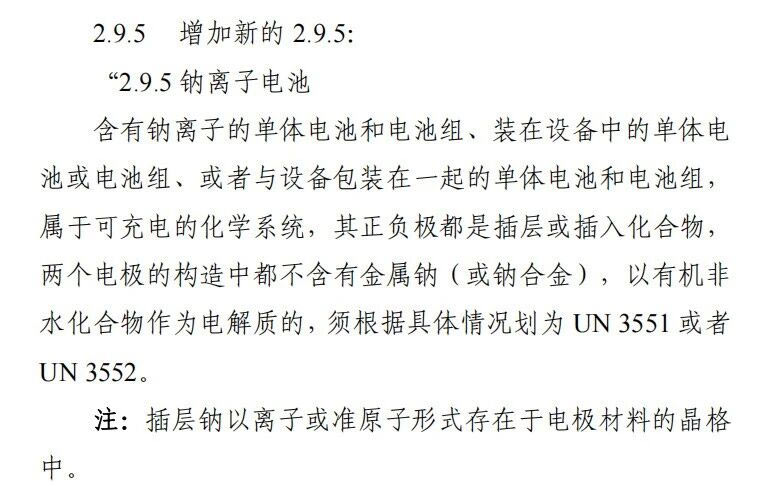
UN3551 (New Addition) : Sodium-ion battery, containing electroelectrolyte.
UN3552 (New Addition) : Sodium-ion batteries installed in the device or packaged together with the device.
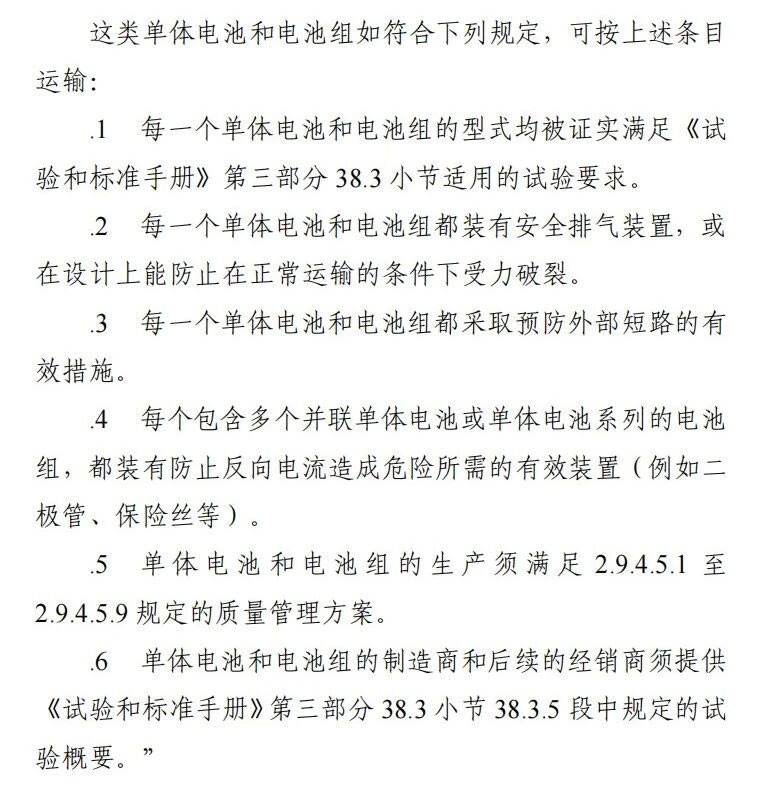
New Chapter 2.9.5 on sodium-ion batteries has been added
New special regulations SP400 and SP401 have been added
SP400 (New addition) : Sodium-ion batteries are not subject to the other provisions of this rule if they meet the following conditions.
If the battery is short-circuited, there will be no electrical energy in the battery, and the short circuit should be easy to verify.
2. The battery meets the requirements of 2.9.5.1, 2.9.5.2, 2.9.5.4, 2.9.5.5 and 2.9.5.6.
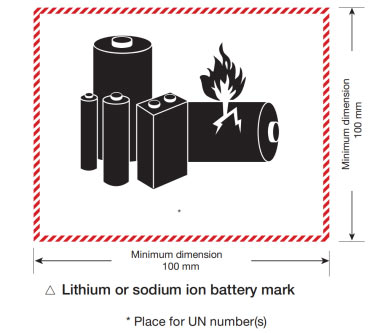
3. The packages shall be marked in accordance with 5.2.1.10, that is, the legend shown in the following figure.
4. The package passed the 1.2-meter drop test without damaging the battery cells or battery packs contained therein.
5. If the battery is installed in the device, the device should be packed in a sturdy outer package. Unless the device itself can provide the same level of protection.
6. Each battery (including when used as a component of a battery pack) shall contain only the dangerous goods permitted for transportation under Chapter 3.4, and the quantity of dangerous goods in the battery shall not exceed the quantity specified in column 7a of the List of dangerous goods under Chapter 3.2.
SP401 (New addition) : Sodium-ion batteries and battery packs using organic electrolytes shall be transported in accordance with UN 3551 or UN3552 as per the actual situation. Sodium-ion batteries using water-based alkaline electrolyte should be transported in accordance with UN2795 (storage battery, wet, containing alkaline solution and storing electricity).
Aerosol fire extinguishers are typical devices for dispersing fire extinguishing agents. Traditional fire extinguishers are usually packaged in pressure cylinders and controlled by pressure devices. However, aerosol fire extinguishers do not have such pressure devices but are equipped with built-in gas generators that contain explosive substances. The explosive substance undergoes an oxidation reaction to produce inert gas, which then reacts with the fire extinguisher inside to spray out the fire extinguishing agent. The firing principle is different from that of traditional pressure-type fire extinguishers. This type of aerosol fire extinguisher has been on the market for a long time, but there has never been a dedicated entry, and its transportation was not standardized. This revision has added exclusive entries and special regulations:
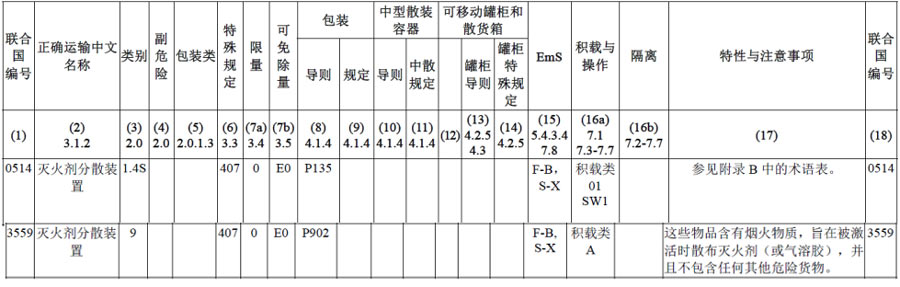
UN0514 (New Addition) : Fire Extinguishing agent distribution device. Hazard category: 1.4 seconds
UN3559 (New Addition) : Fire Extinguishing agent distribution device. Hazard category: Class 9
Special Regulation 407
The 407 fire extinguishing agent dispersion device refers to an item containing pyrotechnic substances, which is used to disperse the fire extinguishing agent (or aerosol) upon activation and does not contain any other dangerous goods. When these items are packaged and transported, they must be tested in accordance with test Series 6(c) of Section 16 of Part 1 of the "Manual of Tests and Criteria", and meet the standards of subcategory 1.4S. When transporting this device, the activation device must be removed or at least two independent measures to prevent accidental activation should be provided. Fire extinguishing agent dispersion devices are classified into Class 9 only when the following additional conditions are met, UN 3559:
This device complies with the exclusion criteria stipulated in 2.1.3.4.2.2, 2.1.3.4.2.3 and 2.1.3.4.2.4.
2. The fire extinguishing agent must meet the requirements of international or regional standards (such as NFPA 2010) and be recognized as safe for normally occupied Spaces.
3. The packaging method of the items must ensure that the external temperature of the package does not exceed 200℃ when activated.
4. This entry is only used with the approval of the relevant authorities of the manufacturing country. This entry does not apply to the "safety device, electrically excited" described in Special Regulation 280 (UN 3268).
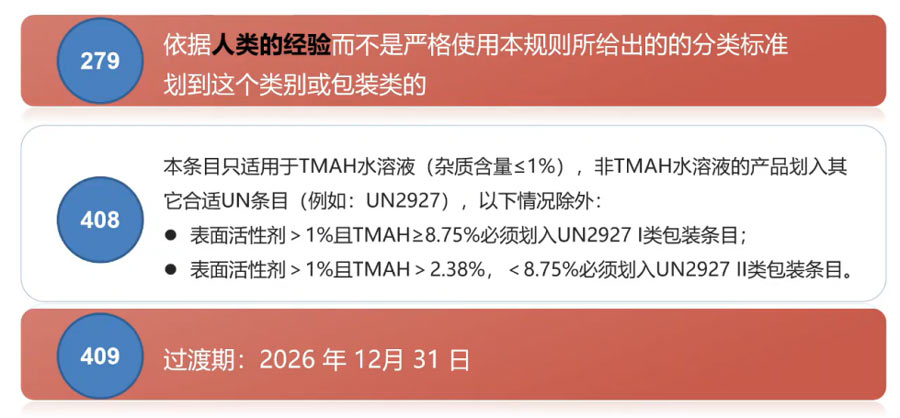
4、Add the item that the aqueous solution of tetramethylammonium hydroxide contains no less than 25% tetramethylammonium hydroxide
Tetramethylammonium hydroxide (TMAH) is used as a semiconductor material. In recent years, there have been frequent poisoning incidents involving personnel. Based on human experience, this amendment distinguishes UN entries according to the different contents of tetramethylammonium hydroxide and adds UN3560 entries:

Silane, which is a compound of silicon and hydrogen, is a general term for a series of compounds, including silane (SiH4), silane (Si2H6), and some more advanced silicon-hydrogen compounds. At present, the most widely used one is silane, which is generally simply referred to as silane.
UN3553 (New Addition) : Disilane

6、Add the entry "Gallium contained in finished products"
China is a major producer of mercury products and one of the world's leading mercury ore producers. Due to the strengthening of environmental regulations and international compliance requirements, the Ministry of Environmental Protection, in conjunction with relevant ministries and commissions, issued Announcement No. 38 in 2017. The Minamata Convention on Mercury came into effect for China on August 16, 2017, clearly stating that "as of January 1, 2026, The production of mercury-containing thermometers and mercury-containing blood pressure monitors is prohibited. Gallium, on the other hand, has been widely marketed as a substitute for mercury, such as gallium-containing thermometers and gallium-containing ultraviolet lamps. This type of gallium contained in finished products has been given an independent UN number and special regulations in this amendment.
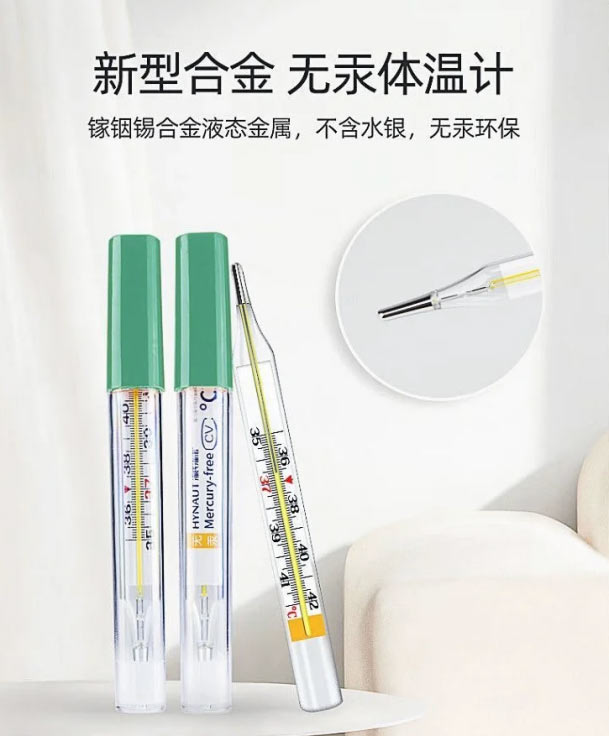
UN3554 (New Addition) : Gallium contained in finished products

The pure substance of sodium trifluoromethyltetrazole is explosive. It is soluble in both water and acetone. Dissolving sodium trifluoromethyltetrazole in an acetone solution with a content of no less than 68% can desensitize the explosive effect.
UN3555 (New Addition) : Acetone solution of sodium trifluoromethyltetrazolium, containing no less than 68% acetone by mass
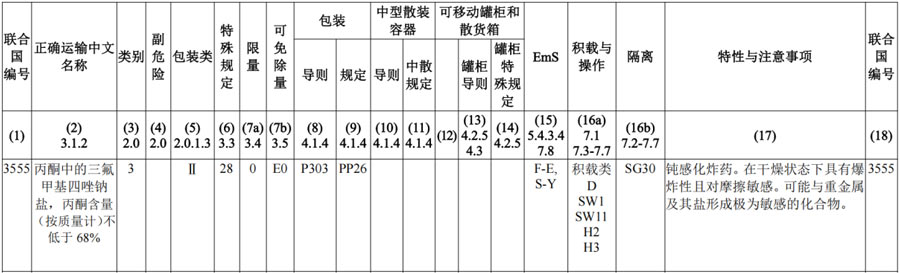
Special provisions
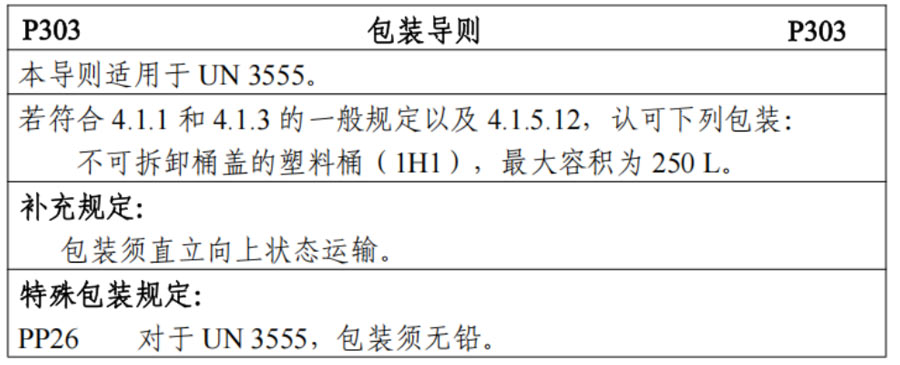
SP28: This substance may be transported in accordance with Class 3 or Clause 4.1 (see 2.3.1.4 and 2.4.2.4) as long as its packaging can ensure at any time during transportation that the percentage of the diluent is not lower than the specified requirements.
Packaging Guidelines
P303+PP26
Carbon, as a category 4.2 flammable substance, is prone to spontaneous combustion in the air. In recent years, spontaneous combustion accidents of carbon cargo have occurred frequently during container shipping by ships. This amendment adds or deletes relevant special provisions, further strengthening the control of transportation safety.
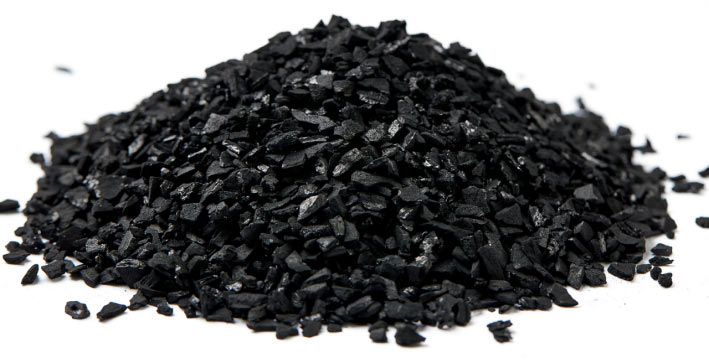
According to the IMDG Rules, carbon is divided into three items:
UN1361: Charcoal, derived from animals or plants (Packaging Class II).
UN1361: Charcoal, derived from animals or plants (Packaging Class III).
UN1362: Charcoal, active (Packaging Class III).
Special provisions
Delete the special provisions SP925 and SP223, and add the relevant requirements of SP978 to UN1361 and SP979 to UN1362.
SP978 (New Addition) :
Exemption requirement: The self-heating substance test (UN.N4 test) is not subject to the exemption of UN1361.
2. Packaging requirements: Untested materials should at least meet packaging Class III standards.
3. Loading Requirements: To ensure normal heat dissipation inside the container, the top space should be at least 30cm. The loading height of packages should not exceed 1.5 meters or the stacking size of stacks should not exceed 16 cubic meters, and the distance between stacks should be at least 15cm.
4. Temperature requirement: The temperature of the material on the day of packaging should not exceed 40°C.
5. Weathering requirements: After production, unpackaged substances should be exposed to the open air for at least 14 days before packaging and transportation. Or after pyrolysis, if the unpackaged substances are steamed and cooled and packaged under inert gas (such as nitrogen), the packages should be stored under loose covers or left outdoors for at least 24 hours before transportation.
SP979 (New Addition) : Exemption for UN1362 activated carbon.
This substance is accompanied by a certificate issued by the consignor, certifying that it is steam-activated carbon.
2. This substance is chemically activated carbon and is accompanied by a certificate issued by a laboratory recognized by the competent authority, certifying that when the substance was tested in accordance with the United Nations Manual of Tests and Criteria (see 33.4.6), the test result for self-heating substances was negative, and thus it does not meet the standards of Class 4.2.
9、Revision of Marine pollutants
The amendments to IMDG Rules 42-24 have made significant revisions to two entries, UN3077 and UN3082, which are classified as Marine pollutants. By adding special provisions, they have clarified the exemption conditions for the maritime transportation of Marine pollutants in small packages.
SP375 (New Addition) : That is, when Marine pollutants classified as the above two numbers are packaged in small packages (liquid ≤5L or solid ≤5Kg), as long as the container complies with the general provisions on packaging such as 4.1.1.1, 4.1.1.2 and 4.1.1.4 to 4.1.1.8, it is not subject to any other provisions of the IMDG Rules.

UN3536
Lithium battery packs, lithium-ion battery packs or lithium metal battery packs installed in freight equipment, the stowage class is revised to stowage class D, which is limited to the floor area of the cargo hold only. It should be particularly noted that from January 1, 2026, container ships and general cargo ships can only load energy storage cabinets on the deck, while ro-ro ships are not allowed to load energy storage cabinets from January 1, 2026!

The UN3129/3130/3148 loading class has been revised from loading class E to loading class D
New requirements and enforcement times have been put forward for devices containing dangerous goods that are in use or planned to be used during transportation, such as container temperature recording equipment and container position trackers.
The Shanghai Maritime Safety Administration has updated the EDI system today and has synchronized the new items involved in this revision. sungreen Logistics hereby reminds everyone to be clear about the relevant updated contents of this amendment, and in accordance with the requirements of the new regulations, make compliant declarations, standardize transportation and ensure safe delivery.
If you have any questions regarding this revision, please feel free to contact our company for consultation at any time. We look forward to your call!