


Sungreen Cloud Classroom | Guidelines for Limited Transport of Dangerous Goods by Sea
What is limited edition?
The limited quantity in international shipping is the "exemption gold medal" of the packaging of dangerous goods. In our daily life, such as daily chemical products, medical care products, self painting, nail gun aerosol cans, polyurethane foam sealant, solid alcohol, Cass air tanks, air fresheners, car cleaners, disinfected wet paper towels, etc., are frequent guests in limited quantity shipping. So what is the limited quantity?
The Limited Quantity (LQ) in the Chinese translation of the IMDG Code means that when the packaging of dangerous goods to be delivered for transportation is small, the danger of the dangerous goods contained is low, and the packaging meets relevant requirements, the technical requirements for some packaging of dangerous goods transportation can be exempted.
Simply put, dangerous goods shipped in limited quantities are packaged in combination with small packaging instead of large packaging, which is relatively sturdy and firm, reducing the possibility of danger and improving the controllability of leakage. This is different from bulk goods transported in tank or container containers, which have relatively lower transportation risks.
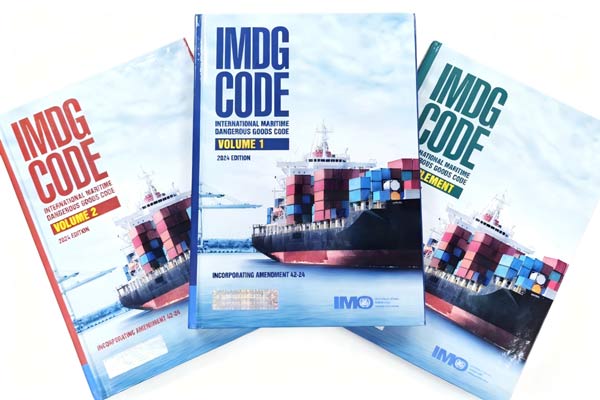
Before understanding the limit, we need to prepare the IMDG code, also known as the hazard code. The hazard code that will be enforced on January 1, 2026.1 is version 42-24.
Determine the packaging method for limited transportation
When transporting goods in limited quantities, combination packaging must be used, which means placing dangerous goods in the inner packaging and then in a suitable outer packaging. Intermediate packaging can be used, and the total gross weight of a single package cannot exceed 30KGS.
Special circumstances
① For dangerous goods of 1.4S, the packaging must fully comply with the provisions of Section 4.1.5 (Special Packaging Regulations for Class 1 Dangerous Goods);
② Aerosols or small containers containing gases do not require inner packaging.
Except for dangerous goods in section 1.4S, shrink wrap or stretch wrap pallets that comply with the provisions of sections 4.1.1.1, 4.1.1.2, and 4.1.1.4 to 4.1.1.8 can be used as outer packaging for dangerous goods shipped in limited quantities.
However, fragile or easily breakable inner packaging, such as those made of glass, porcelain, coarse ceramics, or certain plastics, should be placed in intermediate packaging that meets the design and manufacturing requirements specified in sections 4.1.1.1, 4.1.1.2, and 4.1.1.4 to 4.1.1.8. Its design must comply with the construction requirements of 6.1.4, and the total gross weight of a single package should not exceed 20KG.
Liquid goods of Class 8 and Packaging Class II packaged in glass, porcelain, or coarse ceramics should be placed in compatible rigid intermediate packaging.
Based on the above two steps, we can determine the requirements for limited delivery of dangerous goods. Dangerous goods that meet the conditions for limited transportation are exempt from the dangerous goods packaging performance inspection result form (i.e. performance form) and the dangerous goods packaging use identification result form (i.e. dangerous goods), and can be shipped in compliance without UN packaging:
Isolation exemption
Dangerous goods within different limits can be packed in the same outer packaging, with the following requirements:
1. The substance complies with the provisions of 7.2.6.1 (substances will not undergo dangerous reactions with each other: combustion and/or generation of large amounts of heat, production of flammable, toxic or suffocating gases, generation of corrosive or unstable substances); and
2. Considered the isolation regulations in Chapter 7.2, including the provisions in column 16b of the Dangerous Goods List. Although different regulations are listed in the list of dangerous goods, substances of the same packaging category III can be packed together if they meet the requirements of 1 above.
The isolation requirements in Chapters 7.2 to 7.7, including column 16b of the Dangerous Goods List, do not apply to packages of limited dangerous goods and related dangerous goods. However, items classified as S in Class 1.4 must not be loaded in the same quarantine area or cargo transport component as dangerous goods classified as A and L in Class 1.
Load requirement
Dangerous goods shipped in limited quantities shall be loaded according to Class A stowage, without the need to comply with other stowage regulations in Table 16a of the Dangerous Goods List (Class A stowage: cargo ships can load on the deck or in the cabin)
Posting of signs and markings
A package is the final product of goods and their packaging, which is a convenient whole for transportation.
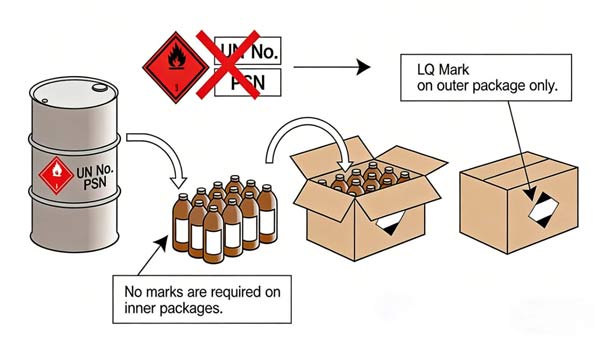
Dangerous goods packages for limited transportation must display the following markings: minimum size: 100mm x 100mm. The minimum width of the square line is 2mm. In areas of uncertain size, the proportion of all parts marked should be as shown in the diagram. If the size of the package is limited, it can be reduced to 50mm x 50mm, but the content must be clear and distinguishable. At the same time, the minimum width of the square line can be reduced to 1mm.
The package only needs to be labeled with a limited quantity label, and does not need to be labeled with: hazardous label and category, correct shipping name, or UN number.
Collection package
When limited quantities of goods are placed in a collection package or loaded in groups, unless the markings of all dangerous goods in the collection package or group package are clearly visible, a collection package label (with a font height requirement of 12mm) needs to be posted. When there are other dangerous goods in the collection package or group package that have not been shipped according to the limited quantity, the regulations for these dangerous goods should comply with the provisions of 5.1.2.1 (i.e., for non limited quantities of dangerous goods transported in a collection package, the correct transport name and UN number of each dangerous goods should be indicated).
As shown in the following figure, the limited quantity markings on the packages in the tray below are clearly visible and do not require additional labeling of the collection package;
On the contrary, if the cardboard box above serves as the packaging material for the collection package and the limited quantity mark on the inner package is not visible, it is necessary to affix the limited quantity mark, the collection package mark, and if it meets the requirements, an indicator arrow should also be affixed (such as for liquid contents, single packaging with ventilation ports, etc.)
① When there are no other non limited dangerous goods consolidated in a limited transport container for shipment, the transport components do not need to display signs and markings according to the provisions of 5.3.2.0 (correct transport name) and 5.3.2.1 (UN number), but a limited quantity mark needs to be affixed, with a minimum size of 250mm x 250mm;
② Transport components containing dangerous goods and limited transport dangerous goods must be labeled and marked according to the regulations for non limited transport dangerous goods. However, if there are no labeling and marking requirements for dangerous goods, transport components must be marked according to the requirements of 3.4.5.5.4.
Sungreen Logistics Editor's Practical Summary - Signage:
(The sign can be simply understood as a major hazard label posted on all four sides of the container)
When the container only contains dangerous goods shipped according to the limit requirements, limit labels should be posted around the outside of the container. No need to affix hazardous labels and categories, correct shipping names, or UN numbers.
3. If UN packaged dangerous goods that are mixed and shipped do not have labeling and marking requirements according to the IMDG Code, limit labels should be posted around the container.
In addition, the signs and markings posted on the transportation components should be clear and legible even after being immersed in seawater for at least 3 months without falling off.
Transport documents
When dangerous goods are transported in limited packaging as specified in Chapter 3.4 and Column 7a of the Dangerous Goods List, the words "Limited" or "LTD QTY" must be indicated.
Declaration procedures for dangerous goods
Although limited transportation is exempt from UN packaging, it is not equivalent to general cargo and still belongs to dangerous goods. This is also the most common misconception that many export enterprises are prone to fall into. Limited goods intended for transportation should provide relevant information about dangerous goods to the shipping company, maritime authorities, and customs according to their hazardous characteristics and declare them correctly.
Declaration required for limited cargo maritime:
1. Certificate of Limited Dangerous Goods
The actual consignor of limited dangerous goods should understand the specific situation, physical and chemical characteristics, relevant data, and requirements of the IMDG Code for relevant limited dangerous goods. They should truthfully fill out the "Limited Dangerous Goods Certificate" and provide it when handling the declaration procedures for limited dangerous goods.
2. Technical Manual for Packaging Dangerous Goods Products/Packaging Technical Manual
When handling the declaration procedures for limited dangerous goods, it is necessary to provide the product technical data sheet (MSDS)/packaging technical data sheet.
3. Dangerous Goods Packing Certificate
Dangerous goods transported in limited quantities also require a packing certificate, issued by the packing inspector and stamped by the packing unit.
4. Information required by other maritime authorities, such as declaration power of attorney.
Customs declaration for limited goods:
When handling customs declaration procedures for dangerous goods with limited shipments, customs supervision requirements should be followed. Dangerous chemicals listed in the 2015 edition of the "Catalogue of Hazardous Chemicals" still need to provide a customs clearance form, that is, undergo inspection before they can be shipped.
As mentioned above, which dangerous goods can be transported in limited quantities, and which dangerous goods cannot be transported in limited quantities?
1. Class 1 explosives (excluding 1.4S);
2. Class 2.3 toxic gases
3. Class 4.1 desensitized explosives
4. Class 4.2: Substances prone to spontaneous combustion
5. Organic peroxides of Class 5.2 that require temperature control
6. Class 6.2 Infectious Substances
7. Class 7 radioactive materials
8. Regulations stipulate the use of dangerous goods in packaging category I (UN codes 1139, 1210, 1268, 1263, 1267, 1863, 1866, 3295 have a limit of 500 milliliters for goods)
9. Carbon dioxide, aerosols, fish meal, life-saving equipment, lithium batteries contained in equipment or packaged together with equipment, genetically modified microorganisms, heated liquids, unspecified, heated solids, airbag inflators or devices or seat belt pre tensioning devices, plastic molds, and cargo transport components in a fumigated state in Class 9 substances.
Lighters, as small gas devices, although have a small net quantity of dangerous goods, cannot be transported in limited quantities due to their flammable nature. It should be noted that the above are general requirements, and there may be individual differences for each type of goods in each category. Please refer to the IMDG rules for judgment.
Above, that's all for the relevant operation guide on limited transportation~! If you still have any questions, please feel free to contact us at any time!
The limited quantity in international shipping is the "exemption gold medal" of the packaging of dangerous goods. In our daily life, such as daily chemical products, medical care products, self painting, nail gun aerosol cans, polyurethane foam sealant, solid alcohol, Cass air tanks, air fresheners, car cleaners, disinfected wet paper towels, etc., are frequent guests in limited quantity shipping. So what is the limited quantity?
The Limited Quantity (LQ) in the Chinese translation of the IMDG Code means that when the packaging of dangerous goods to be delivered for transportation is small, the danger of the dangerous goods contained is low, and the packaging meets relevant requirements, the technical requirements for some packaging of dangerous goods transportation can be exempted.
Simply put, dangerous goods shipped in limited quantities are packaged in combination with small packaging instead of large packaging, which is relatively sturdy and firm, reducing the possibility of danger and improving the controllability of leakage. This is different from bulk goods transported in tank or container containers, which have relatively lower transportation risks.
Before understanding the limit, we need to prepare the IMDG code, also known as the hazard code. The hazard code that will be enforced on January 1, 2026.1 is version 42-24.
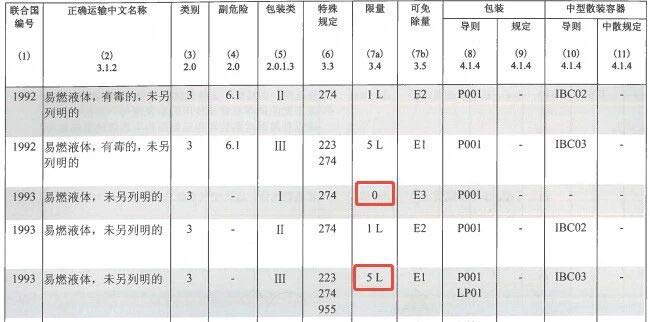
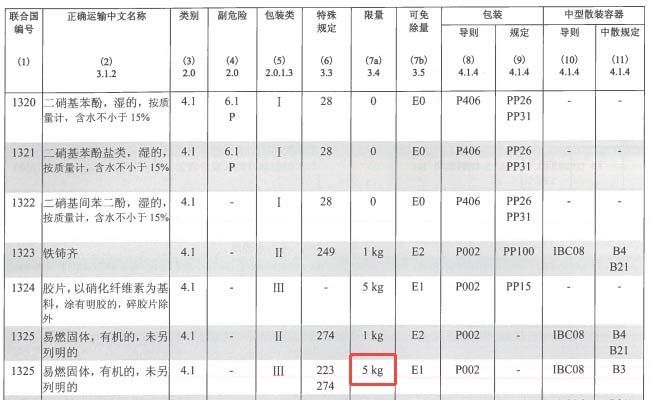
According to the contents listed in column 7a of the dangerous goods list in Chapter 3 of Volume 2 of the "Dangerous Goods Regulations", this is the first step for us to confirm whether the dangerous goods to be shipped can be transported in limited quantities (here we need to know the classification and identification conclusion of the dangerous goods: we can refer to the dangerous characteristics classification and identification report or MSDS to determine the classification of the dangerous goods):
Determine the packaging method for limited transportation
When transporting goods in limited quantities, combination packaging must be used, which means placing dangerous goods in the inner packaging and then in a suitable outer packaging. Intermediate packaging can be used, and the total gross weight of a single package cannot exceed 30KGS.
Special circumstances
① For dangerous goods of 1.4S, the packaging must fully comply with the provisions of Section 4.1.5 (Special Packaging Regulations for Class 1 Dangerous Goods);
② Aerosols or small containers containing gases do not require inner packaging.
Except for dangerous goods in section 1.4S, shrink wrap or stretch wrap pallets that comply with the provisions of sections 4.1.1.1, 4.1.1.2, and 4.1.1.4 to 4.1.1.8 can be used as outer packaging for dangerous goods shipped in limited quantities.
However, fragile or easily breakable inner packaging, such as those made of glass, porcelain, coarse ceramics, or certain plastics, should be placed in intermediate packaging that meets the design and manufacturing requirements specified in sections 4.1.1.1, 4.1.1.2, and 4.1.1.4 to 4.1.1.8. Its design must comply with the construction requirements of 6.1.4, and the total gross weight of a single package should not exceed 20KG.
Liquid goods of Class 8 and Packaging Class II packaged in glass, porcelain, or coarse ceramics should be placed in compatible rigid intermediate packaging.
Based on the above two steps, we can determine the requirements for limited delivery of dangerous goods. Dangerous goods that meet the conditions for limited transportation are exempt from the dangerous goods packaging performance inspection result form (i.e. performance form) and the dangerous goods packaging use identification result form (i.e. dangerous goods), and can be shipped in compliance without UN packaging:
Isolation exemption
Dangerous goods within different limits can be packed in the same outer packaging, with the following requirements:
1. The substance complies with the provisions of 7.2.6.1 (substances will not undergo dangerous reactions with each other: combustion and/or generation of large amounts of heat, production of flammable, toxic or suffocating gases, generation of corrosive or unstable substances); and
2. Considered the isolation regulations in Chapter 7.2, including the provisions in column 16b of the Dangerous Goods List. Although different regulations are listed in the list of dangerous goods, substances of the same packaging category III can be packed together if they meet the requirements of 1 above.
The isolation requirements in Chapters 7.2 to 7.7, including column 16b of the Dangerous Goods List, do not apply to packages of limited dangerous goods and related dangerous goods. However, items classified as S in Class 1.4 must not be loaded in the same quarantine area or cargo transport component as dangerous goods classified as A and L in Class 1.
Load requirement
Dangerous goods shipped in limited quantities shall be loaded according to Class A stowage, without the need to comply with other stowage regulations in Table 16a of the Dangerous Goods List (Class A stowage: cargo ships can load on the deck or in the cabin)
Posting of signs and markings

Limited label
A package is the final product of goods and their packaging, which is a convenient whole for transportation.
Dangerous goods packages for limited transportation must display the following markings: minimum size: 100mm x 100mm. The minimum width of the square line is 2mm. In areas of uncertain size, the proportion of all parts marked should be as shown in the diagram. If the size of the package is limited, it can be reduced to 50mm x 50mm, but the content must be clear and distinguishable. At the same time, the minimum width of the square line can be reduced to 1mm.
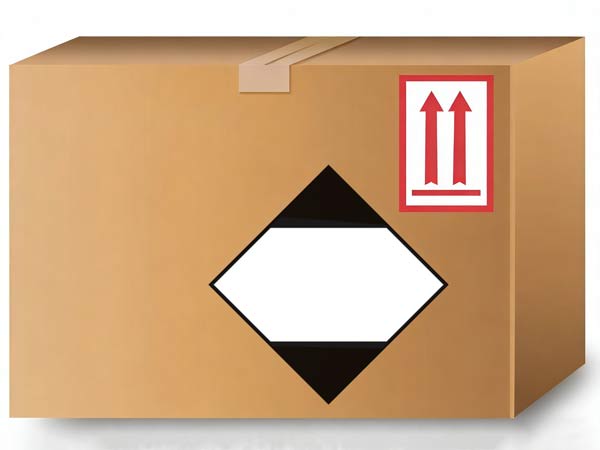
The package only needs to be labeled with a limited quantity label, and does not need to be labeled with: hazardous label and category, correct shipping name, or UN number.
Collection package
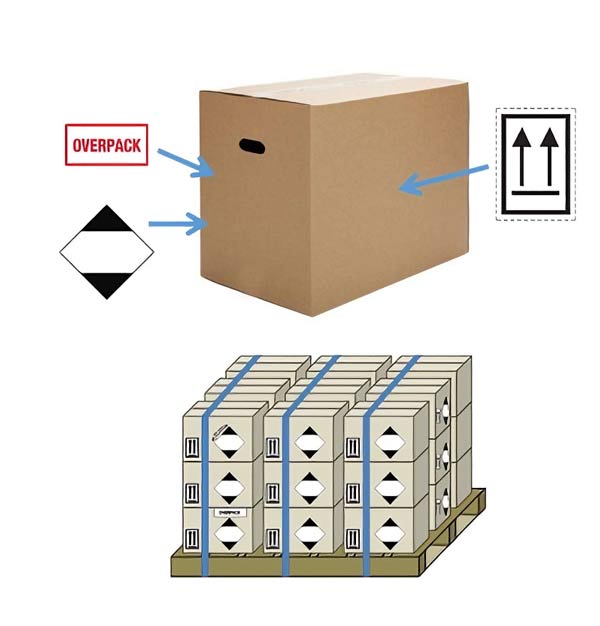
When limited quantities of goods are placed in a collection package or loaded in groups, unless the markings of all dangerous goods in the collection package or group package are clearly visible, a collection package label (with a font height requirement of 12mm) needs to be posted. When there are other dangerous goods in the collection package or group package that have not been shipped according to the limited quantity, the regulations for these dangerous goods should comply with the provisions of 5.1.2.1 (i.e., for non limited quantities of dangerous goods transported in a collection package, the correct transport name and UN number of each dangerous goods should be indicated).

Collection package tag
As shown in the following figure, the limited quantity markings on the packages in the tray below are clearly visible and do not require additional labeling of the collection package;
On the contrary, if the cardboard box above serves as the packaging material for the collection package and the limited quantity mark on the inner package is not visible, it is necessary to affix the limited quantity mark, the collection package mark, and if it meets the requirements, an indicator arrow should also be affixed (such as for liquid contents, single packaging with ventilation ports, etc.)
① When there are no other non limited dangerous goods consolidated in a limited transport container for shipment, the transport components do not need to display signs and markings according to the provisions of 5.3.2.0 (correct transport name) and 5.3.2.1 (UN number), but a limited quantity mark needs to be affixed, with a minimum size of 250mm x 250mm;
② Transport components containing dangerous goods and limited transport dangerous goods must be labeled and marked according to the regulations for non limited transport dangerous goods. However, if there are no labeling and marking requirements for dangerous goods, transport components must be marked according to the requirements of 3.4.5.5.4.
Sungreen Logistics Editor's Practical Summary - Signage:
(The sign can be simply understood as a major hazard label posted on all four sides of the container)
When the container only contains dangerous goods shipped according to the limit requirements, limit labels should be posted around the outside of the container. No need to affix hazardous labels and categories, correct shipping names, or UN numbers.
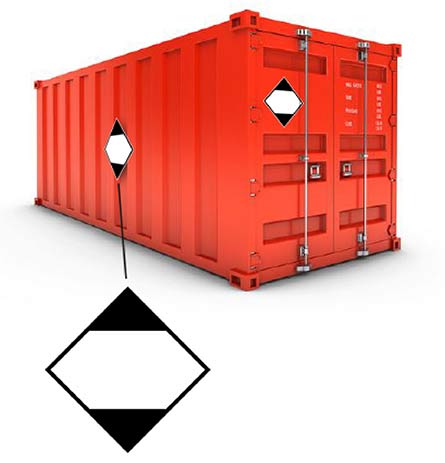
3. If UN packaged dangerous goods that are mixed and shipped do not have labeling and marking requirements according to the IMDG Code, limit labels should be posted around the container.
In addition, the signs and markings posted on the transportation components should be clear and legible even after being immersed in seawater for at least 3 months without falling off.
Transport documents
When dangerous goods are transported in limited packaging as specified in Chapter 3.4 and Column 7a of the Dangerous Goods List, the words "Limited" or "LTD QTY" must be indicated.
Declaration procedures for dangerous goods
Although limited transportation is exempt from UN packaging, it is not equivalent to general cargo and still belongs to dangerous goods. This is also the most common misconception that many export enterprises are prone to fall into. Limited goods intended for transportation should provide relevant information about dangerous goods to the shipping company, maritime authorities, and customs according to their hazardous characteristics and declare them correctly.
Declaration required for limited cargo maritime:
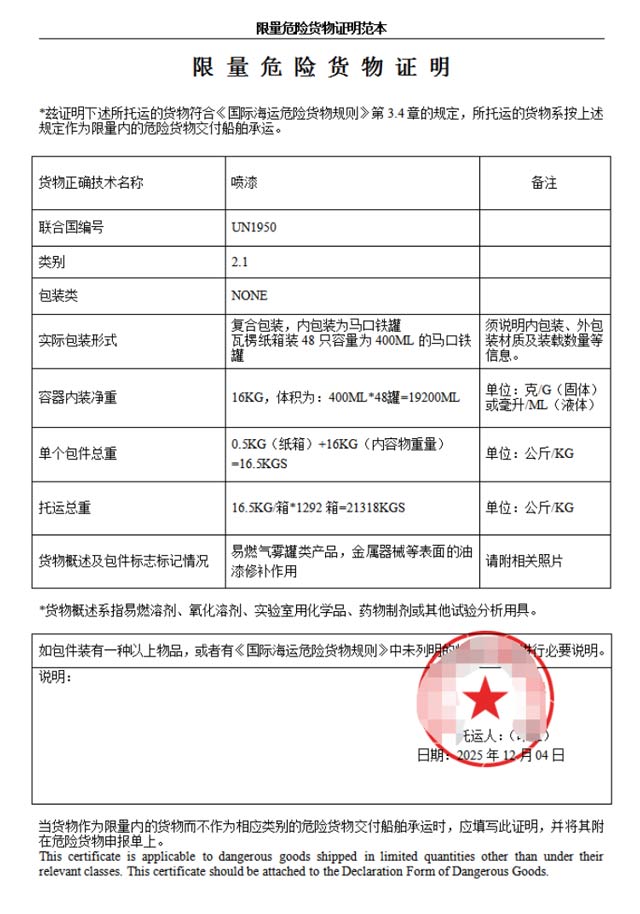
1. Certificate of Limited Dangerous Goods
The actual consignor of limited dangerous goods should understand the specific situation, physical and chemical characteristics, relevant data, and requirements of the IMDG Code for relevant limited dangerous goods. They should truthfully fill out the "Limited Dangerous Goods Certificate" and provide it when handling the declaration procedures for limited dangerous goods.
2. Technical Manual for Packaging Dangerous Goods Products/Packaging Technical Manual
When handling the declaration procedures for limited dangerous goods, it is necessary to provide the product technical data sheet (MSDS)/packaging technical data sheet.
3. Dangerous Goods Packing Certificate
Dangerous goods transported in limited quantities also require a packing certificate, issued by the packing inspector and stamped by the packing unit.
4. Information required by other maritime authorities, such as declaration power of attorney.
Customs declaration for limited goods:
When handling customs declaration procedures for dangerous goods with limited shipments, customs supervision requirements should be followed. Dangerous chemicals listed in the 2015 edition of the "Catalogue of Hazardous Chemicals" still need to provide a customs clearance form, that is, undergo inspection before they can be shipped.
As mentioned above, which dangerous goods can be transported in limited quantities, and which dangerous goods cannot be transported in limited quantities?
1. Class 1 explosives (excluding 1.4S);
2. Class 2.3 toxic gases
3. Class 4.1 desensitized explosives
4. Class 4.2: Substances prone to spontaneous combustion
5. Organic peroxides of Class 5.2 that require temperature control
6. Class 6.2 Infectious Substances
7. Class 7 radioactive materials
8. Regulations stipulate the use of dangerous goods in packaging category I (UN codes 1139, 1210, 1268, 1263, 1267, 1863, 1866, 3295 have a limit of 500 milliliters for goods)
9. Carbon dioxide, aerosols, fish meal, life-saving equipment, lithium batteries contained in equipment or packaged together with equipment, genetically modified microorganisms, heated liquids, unspecified, heated solids, airbag inflators or devices or seat belt pre tensioning devices, plastic molds, and cargo transport components in a fumigated state in Class 9 substances.
Lighters, as small gas devices, although have a small net quantity of dangerous goods, cannot be transported in limited quantities due to their flammable nature. It should be noted that the above are general requirements, and there may be individual differences for each type of goods in each category. Please refer to the IMDG rules for judgment.
Above, that's all for the relevant operation guide on limited transportation~! If you still have any questions, please feel free to contact us at any time!
Sungreen Logistics reminds you once again that limited transportation of dangerous goods by sea does not equal general cargo. Please make sure to declare in compliance!